

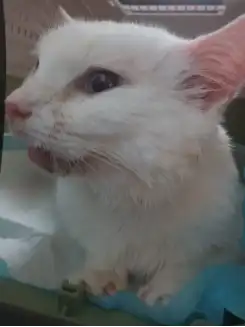
“Difficulty Breathing” Angel during the outbreak Photograph © Catshope™
Her illness during the April to June 2026 outbreak
Angel has always been a cat with something to say. She talks to people, birds and insects, greets us with a nod, and rolls over for a tummy rub. She is a much-loved part of CatsHope™.
During the cat flu outbreak that affected CatsHope™ between April and June 2026, we found ourselves hoping for something very simple: that Angel would eat. As her condition worsened, her kidneys and liver began to fail. She needed hospital care, and we were frightened that we might lose her.
Angel From the Jaws of Death
When Angel stopped eating
Mimi Dolly Guli, known as MDG, had arrived at CatsHope™ for fostering on 20 April 2026. In the weeks that followed, a respiratory illness spread among the resident cats. Some recovered quickly. Others needed much longer. Angel became the most seriously ill.
She stopped eating altogether. She had diarrhoea, blood in her stool, and repeatedly vomited the small amounts of food we managed to give her. We spent much of each day cleaning her, tending to her and trying to encourage her to take another mouthful.
Her beautiful white coat became so stained that we gently joked about our “little calico cat”. It was a small attempt to keep our spirits up while we cared for her. Underneath it was a growing fear: she was taking in so little, and we could see her getting worse.
The nursing we could provide at home was no longer enough. Angel was admitted to hospital for intensive veterinary care.
More than one medical problem
Her lungs were congested, her kidneys and liver were failing, and she also had a urinary tract infection. Each new finding added to our worry. This was a much-loved cat whose body was struggling on several fronts.
Her blood glucose was elevated too, and the vets raised the possibility of diabetes. That glucose problem later resolved. At the time, though, it was another uncertainty alongside everything else she was facing.
For six days, Angel needed tube feeding. A monitoring device was fitted to her body, and the veterinary team kept a close watch on her blood pressure and blood glucose. She also received nebuliser treatment to help her breathing.
Seeing Angel needing hospital care was frightening. We wanted her well enough to come home, to be comfortable again, and to return to the life she knew.
Only a month earlier, Angel had been curled up comfortably on her chair at home. Seeing her so thin and unwell in hospital was heartbreaking.
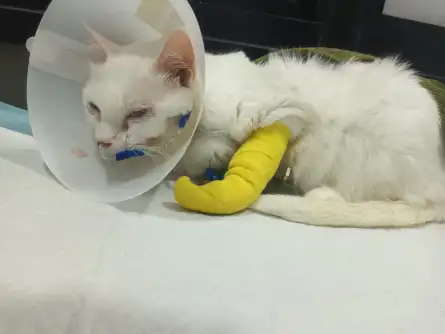
“First Day” Angel receiving hospital care Photograph © Catshope™
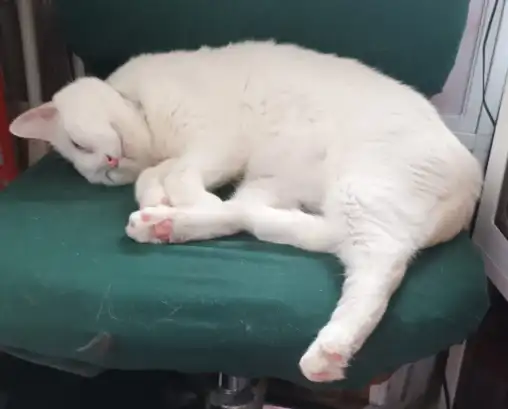
“Angel One Month Before the Outbreak” Photograph © Catshope™
Caring through the outbreak
While Angel was in hospital, the other cats still needed us. Food, medication, cleaning and close observation filled the days. It took at least three months to stabilise all the cats. Through that time, we were caring for several sick cats at once, watching for small signs of improvement and trying to keep up with the cost of their care.
Angel’s hospital and clinic care cost more than $5,000. The other cats’ veterinary bills came to about $3,000. Supplements for all the cats added around $300 a month. Those supplements continued for several months, and the monthly expense is still ongoing.
Angel survived. Having her with us today means a great deal after seeing how ill she became. Her story also belongs within the wider account of that difficult period at CatsHope™, when a foster cat’s journey and the lives of our residents became intertwined.
MDG was a cat who needed safety and a chance at a home. The experience strengthened our understanding of the responsibilities that come with fostering: caring for a new arrival while protecting the cats already in our care.
We remain grateful to the veterinary team and to everyone whose support helped us care for Angel and the rest of the CatsHope™ family through those difficult weeks.
What caregivers can learn from Angel’s illness
Angel’s experience was severe. Her kidney, liver and urinary problems required their own veterinary assessment; they should not be assumed to occur in every case of cat flu. The points below are general guidance for recognising when a cat needs help.
Take a loss of appetite seriously
Contact a vet promptly when a sick cat stops eating, especially if there is vomiting, diarrhoea or marked weakness. Do not wait several days for appetite to return. Cornell advises that even 24 hours without food can seriously affect an adult cat’s health. A vet should assess both the cause and the need for nutritional support. Cornell Feline Health Center — Loss of appetite
Recognise signs that need urgent care
Difficult or open-mouth breathing, collapse or an unresponsive cat require immediate veterinary attention. A cat who cannot keep food or water down also needs prompt assessment. Tell the vet how long the cat has been eating poorly and describe any changes in breathing, activity, vomiting or diarrhoea. OC Animal Care — Respiratory infection warning signs
Let the vet guide treatment and feeding
Cat flu commonly involves feline herpesvirus or calicivirus. Congestion and a painful mouth can make eating difficult. Severe cases may need hospitalisation, fluids and assisted nutrition. Ask your vet how to support feeding safely; do not force food into a struggling cat’s mouth. Cats Protection — Cat flu Cornell — Nutritional support
Understand a raised glucose result
Cats can have a temporary rise in blood glucose because of stress. A diabetes diagnosis may require repeat tests and other evidence, rather than one high reading. The attending vet must interpret the results. This general explanation does not establish why Angel’s glucose rose; in her case, the elevation later resolved. Cornell Feline Health Center — Feline diabetes
Protect cats who share a home
Discuss separation arrangements for new or unwell cats with your vet. Sick cats may need a separate room, food bowls and litter trays, with careful hygiene between groups. Vaccination helps reduce the risk of severe cat flu, but it cannot prevent every infection. Your vet can advise on vaccination timing and when cats can safely mix. Cats Protection — Cat flu and households with several cats
Help CatsHope™ be ready for the next emergency
Angel’s illness showed us how quickly everyday care can become an emergency, and how long the costs can continue afterwards. Hospitalisation and clinic visits were only part of it. Months of care followed, with every other cat still needing food, shelter and attention.
This is part of why CatsHope™ raises support for emergency medical needs, foster care and the practical work of caring for vulnerable cats. Many caregivers do not have a large reserve to draw on when an animal becomes seriously ill.
If you are able to help, please support CatsHope™’s wider work. Your contribution can help us build the resources needed for veterinary care, food and support for cats and the people caring for them. Sharing our work can help more people understand these needs too.
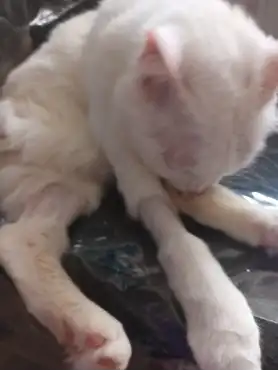
“Out of the Hospital”Angel after leaving hospital.
Photograph © CatsHope™
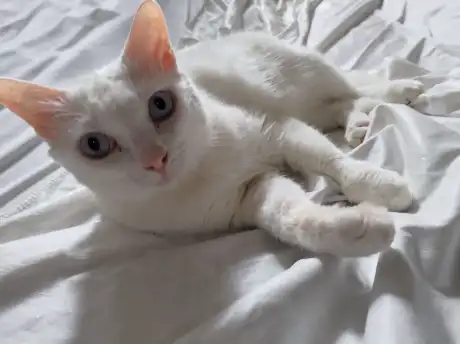
“Fur Still Growing Back”Angel during her recovery, with her fur still growing back.
Photograph © CatsHope™
Article By Tiffany Argent, CatsHope™ Ambassador.
Story and images © CatsHope™
Related stories
Earlier in Angel’s story: Angel — The Night She Fell
The wider outbreak: Mimi Dolly Guli — Part 3, When the Illness Spread
Caring for the colony: Mimi Dolly Guli — Part 4, Fighting Back
